Proceedings · Session S-626 · filed October 12, 2026
Research Funding & PolicySession paper
DOE Opens Solar Topics Under SBIR/STTR for Small Business Bidders
The Department of Energy has published solar topics under its SBIR/STTR programs, opening federal small-business funding for photovoltaic research.
By Tom Whitfield3 min read577 words
Summary
- The U.S. Department of Energy published solar topics under its SBIR/STTR programs on its official .gov site.
- STTR topics require a formal research partnership between a small business and a nonprofit research institution.
- The listing defines solar research priorities for the current federal small-business solicitation cycle.
- The announcement is a topic listing, not an award or results announcement; no funding amounts to named companies are included.
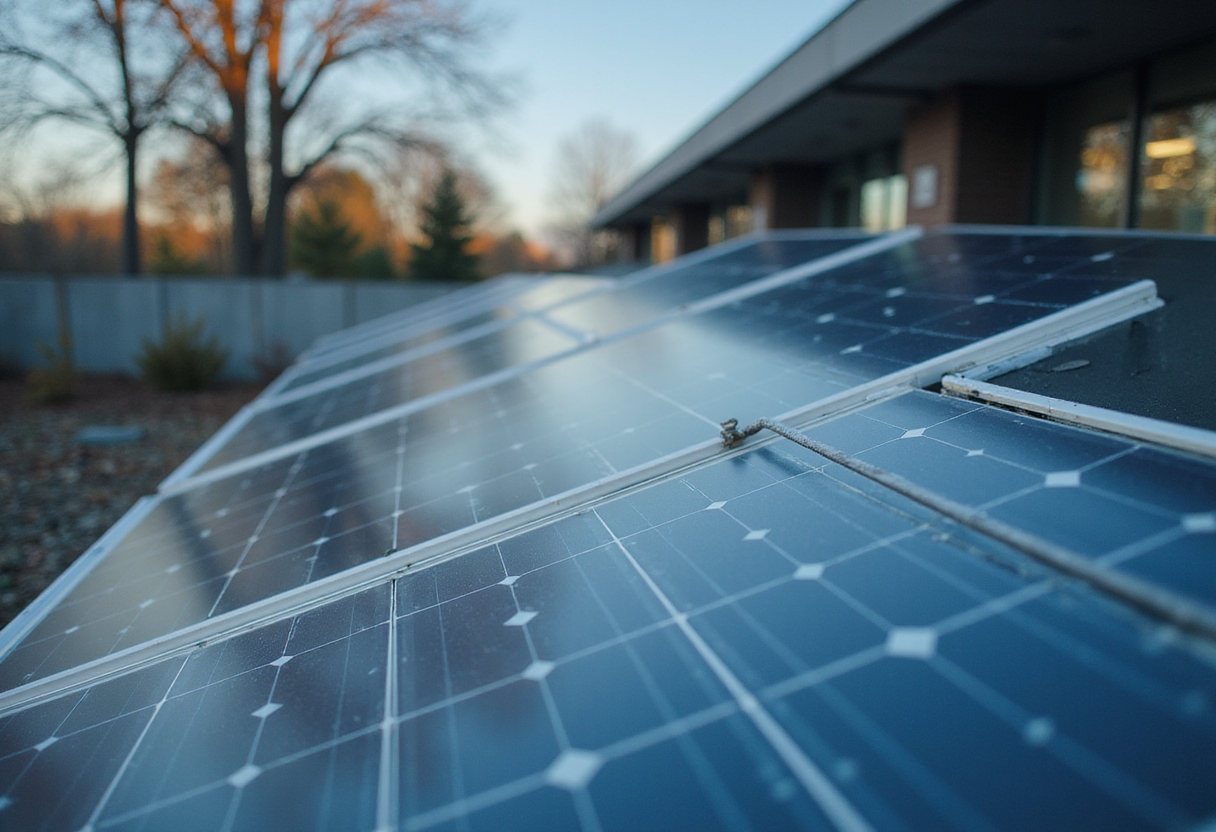
The U.S. Department of Energy has published a set of solar-focused topics under its Small Business Innovation Research (SBIR) and Small Business Technology Transfer (STTR) programs, opening a defined federal funding channel for small companies working on photovoltaic and related solar technologies.
The listing, posted on the Department of Energy's official .gov domain, signals which solar research directions the department considers priorities for the current solicitation cycle. For R&D managers at small firms and university-linked startups, the practical question is straightforward: does the company's technical roadmap align with the topics DOE has named, and can it clear the SBIR size and ownership rules before the submission window closes?
What is SBIR/STTR and why does it matter for solar R&D budgets?
SBIR and STTR are competitive federal programs that reserve a portion of agency research budgets for small businesses. The STTR variant additionally requires a formal research partnership between a small company and a nonprofit research institution — typically a university or national laboratory — which makes it a distinct instrument for academic groups seeking a commercialization path for lab-stage solar work.
For portfolio decisions, the two programs differ in one material respect: SBIR funds the small company directly, while STTR routes a required share of the work through the partnering institution. Solar startups weighing which track to pursue need to examine the specific topic descriptions DOE has released, since eligibility and scope sit in those documents rather than in the general program rules.
What does the DOE topic listing actually contain?
The Department of Energy's published material identifies solar topics within the broader SBIR/STTR solicitation structure. DOE's Solar Energy Technologies Office has historically used this channel to fund early-stage photovoltaic, manufacturing, and systems-integration research at companies that would not otherwise compete for large federal awards.
The announcement itself is a topic listing, not a results announcement. It contains no measured performance data, no award amounts tied to named companies, and no trial or licensing milestones. Readers should treat it as a solicitation signal — an input to pipeline planning — rather than as evidence of technical progress.
How should researchers and R&D managers interrogate this?
A few due-diligence steps follow from how these programs operate:
- Read the full topic descriptions on the DOE site before allocating proposal-writing effort; topic scope determines both eligibility and evaluation criteria.
- Confirm the current-phase funding levels and submission deadlines in the official funding opportunity announcement, since the topic listing alone does not always restate them.
- For STTR topics, identify a qualifying research partner early — the formal agreement between company and institution takes time to negotiate.
- Assess whether the topic's technical objectives match measured capabilities, not projected ones, since SBIR review panels focus on feasibility.
As with any agency priority list, the underlying question is who set the agenda and why. DOE's topic selection reflects departmental solar strategy, and companies building multi-year plans around these topics should track how priorities shift between solicitation cycles.
What comes next?
Companies and research groups should retrieve the complete topic descriptions and funding opportunity details directly from the Department of Energy website and verify deadlines against the official announcement. The listing's appearance indicates the department is actively directing small-business federal dollars toward solar innovation in the current cycle, and firms that align their proposals to the named topics early will hold an advantage as the submission window proceeds.
via Google News: Technology transfer (Source)
Filed under
- sbir-sttr
- solar-energy-research
- federal-r-d-funding
- small-business-innovation
- doe-programs
More from Tom Whitfield
Show full bio
Senior reporter covering media and advertising at Hypothesis Wire.
194 articles
References
- DOE Surfaces Details of Small Innovative Projects in Solar Program
- SBA Distributes $8M+ in FAST Grants to 50 Organizations
- DOE Opens $12M Funding Round for Space-Grade Photovoltaics
- Q/C Technologies signs research collaboration with Sandia National Laboratories
- NSF Puts $250M Behind SBIR/STTR Restart, $40M for Instruments